
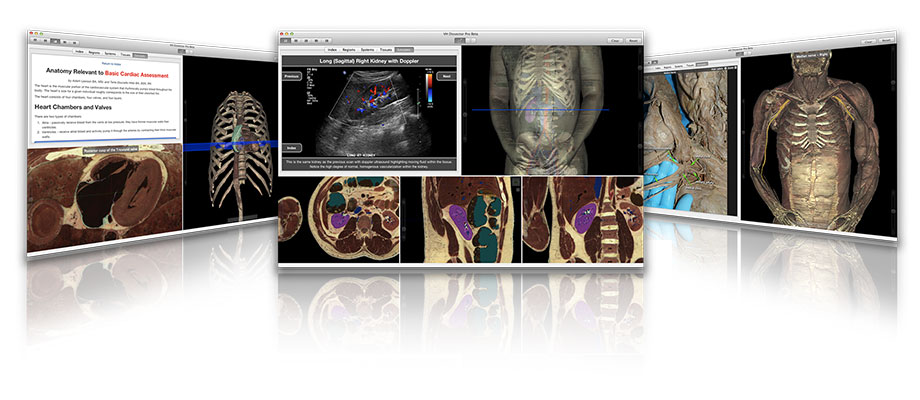
Built on real anatomy from the National Library of Medicine's Visible Human Project®, the VH Dissector platform provides an integrated environment for anatomical education and reference. With the ability to interact with correlated 3D and cross-sectional views of over 2,000 anatomical structures through identification, dissection, assembly and rotation the VH Dissector helps students understand the complex three-dimensional structure of the human body. Combining a complete electronic dissector with integrated 3D and cross-sectional atlases, the VH Dissector platform provides a comprehensive resource for gross anatomy education. Used in the dissection lab, for small group discussions or as a self-study resource, the VH Dissector provides:
Step-by-Step Dissection Instructions
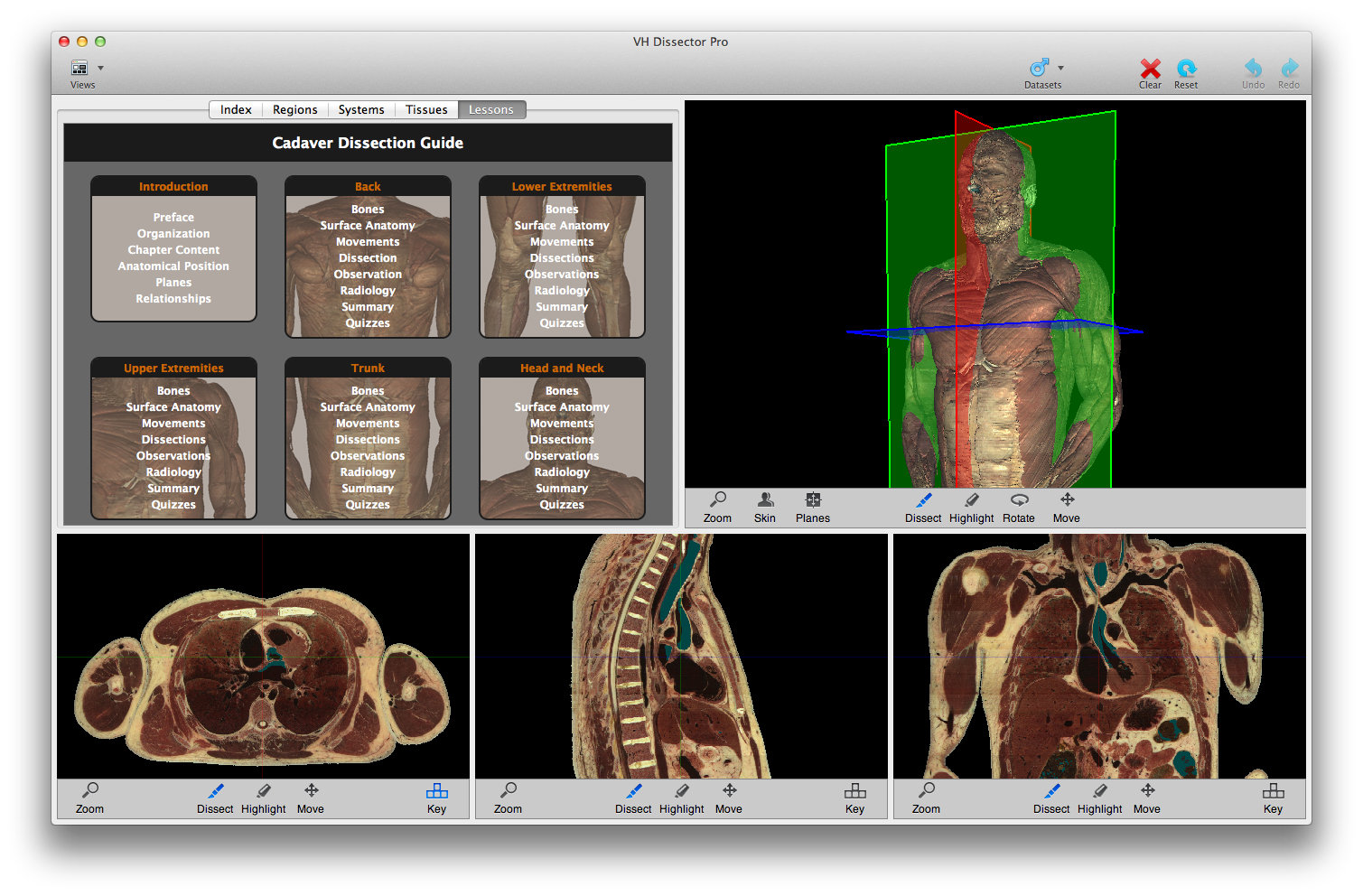
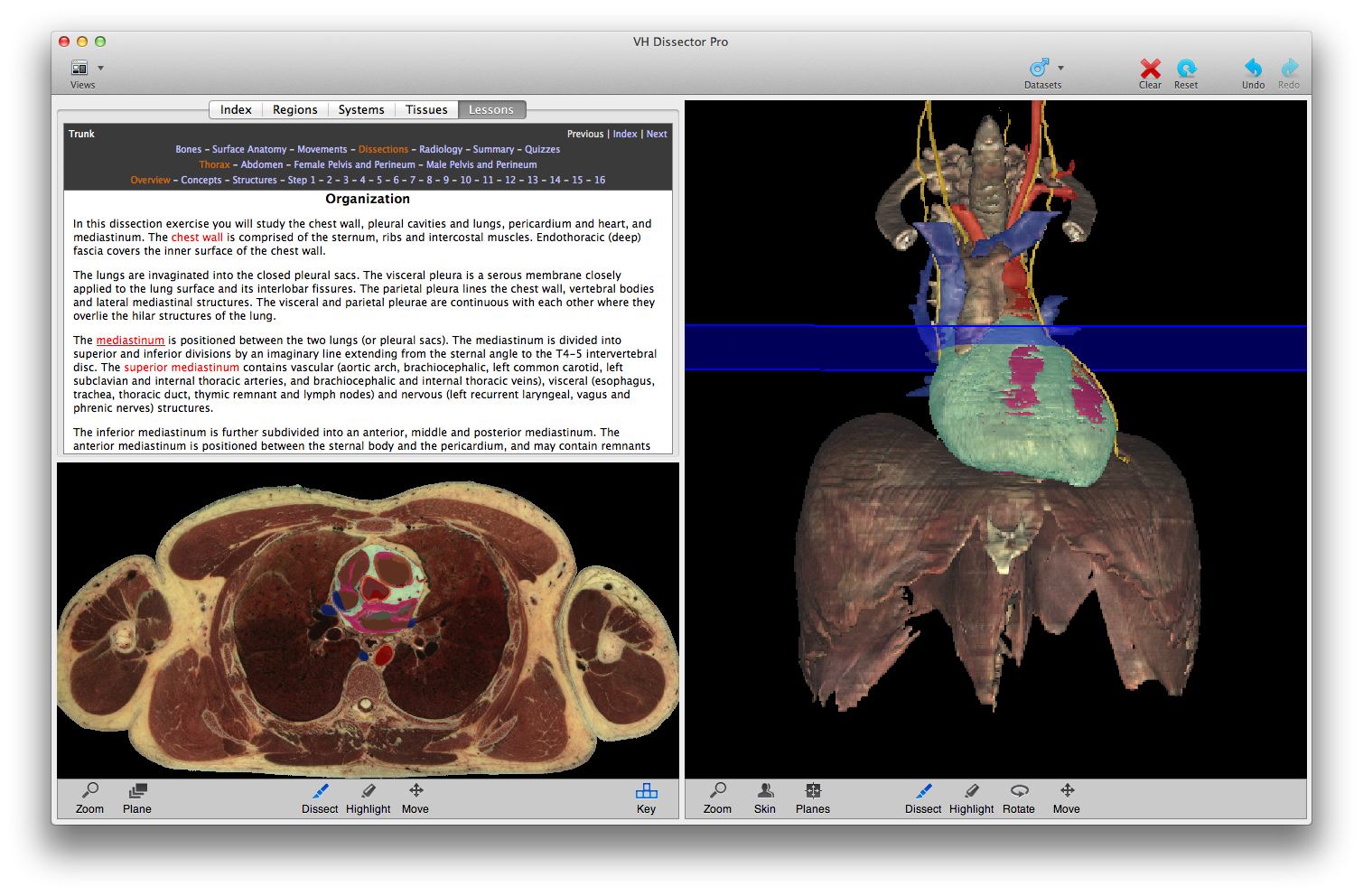
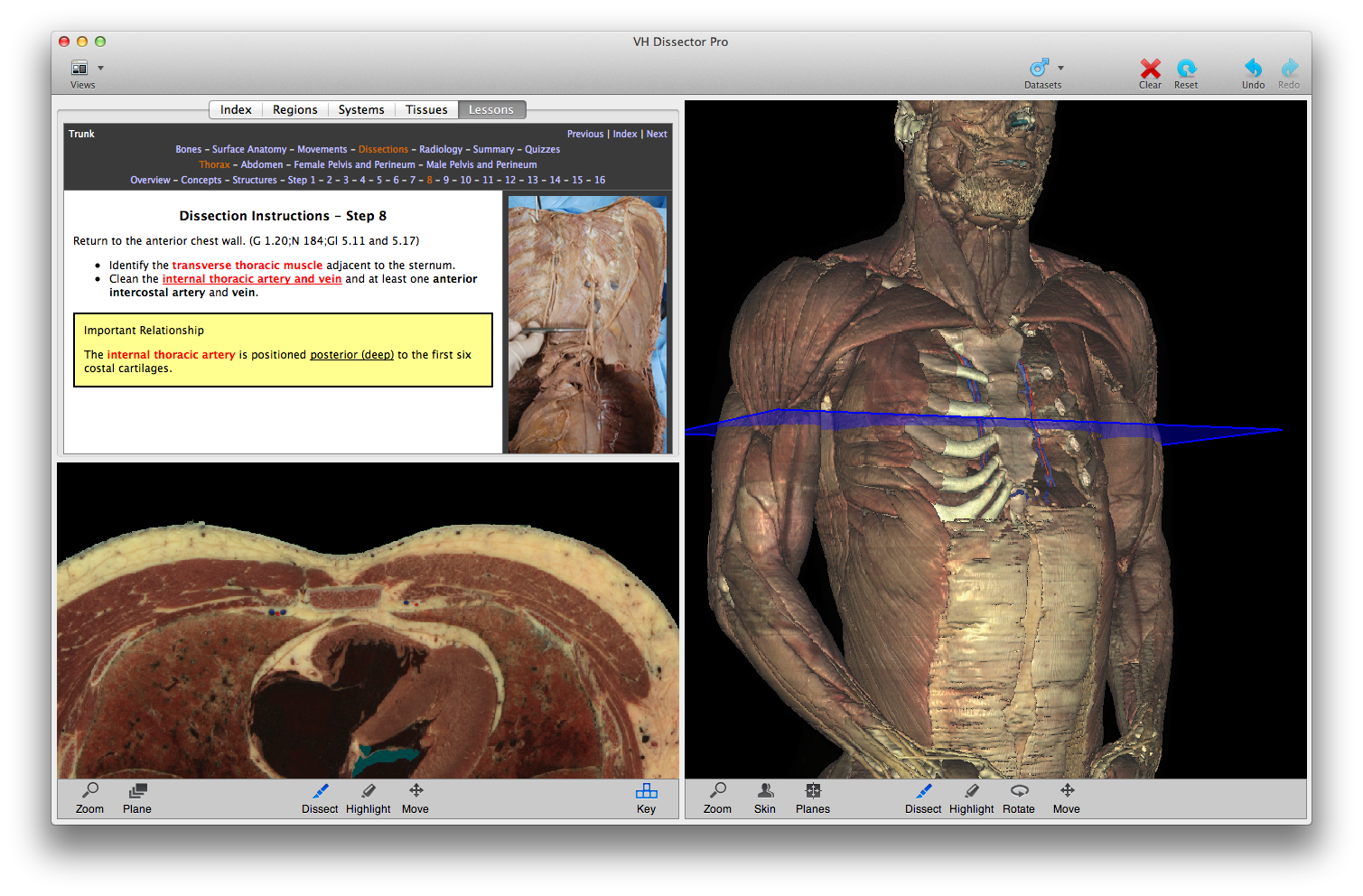
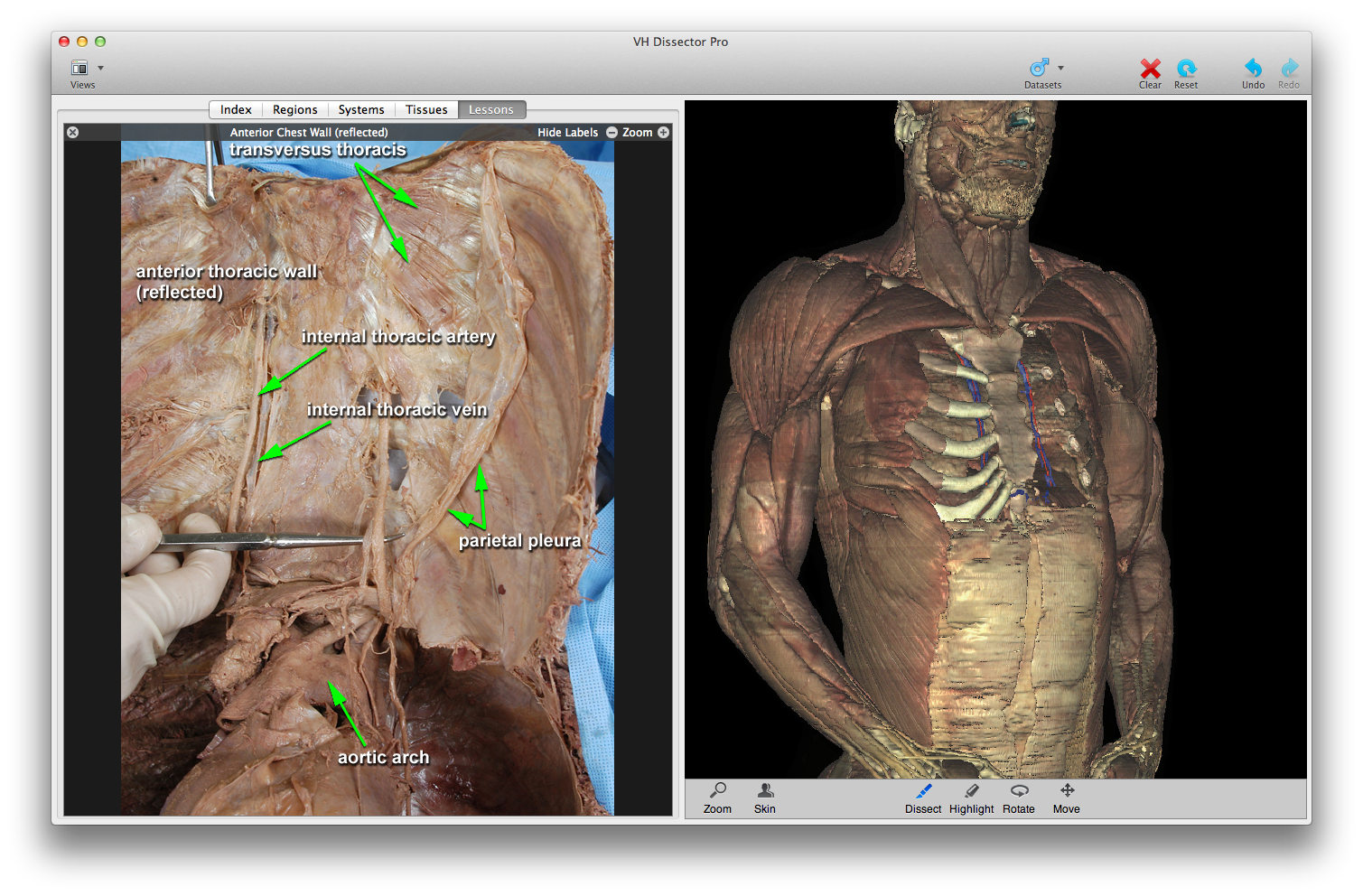
Dissections are organized regionally and each dissection starts with an overview of the anatomical features of the area along with key concepts such as muscle function, innervation and blood supply. These introductions are then followed by step-by-step dissection instructions with correlated high-resolution labeled dissection photographs to help students quickly locate and identify structures in the lab. Within each step important relationships between key structures are highlighted and demonstrated through links to the VH Dissector's 3D and cross-sectional views helping students better understand the complex relationships of the human body.
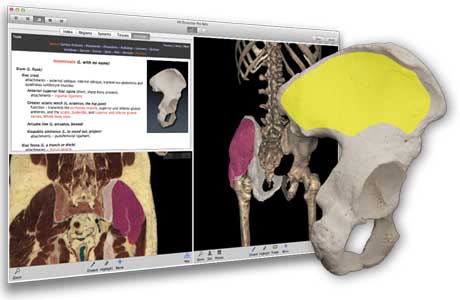
High-resolution virtual "bone box"
Interactive high-resolution photographs of each bone with labeled landmarks provide students with a way to study these details outside of the anatomy lab. Students can identify each landmark and view them from a variety of angles. Also, unlike a real bone lab, with the VH Dissector students can study the soft tissue related to each landmark to improve understanding and retention. This resource allows students to study this necessary information outside of class in a virtual environment, wherever and whenever they want.
Clinical Rotations
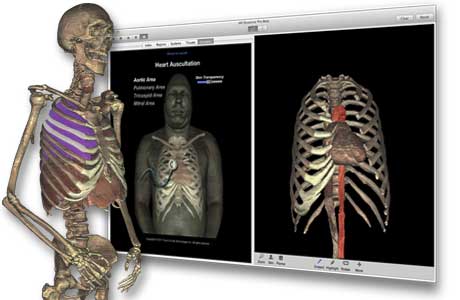
The VH Dissector platform provides an interactive, always available anatomical resource for students to review and better understand clinical anatomy as they progress through their clinical rotations and on into residency. Using the VH Dissector they can study clinical skills in an anatomical context, review key anatomical concepts for surgical procedures and better understand MRI, CT and Ultrasound clinical imaging.
Career Reference
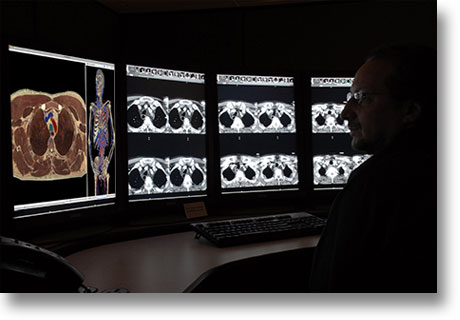
As the most comprehensive electronic 3D and cross-sectional atlas available, the VH Dissector belongs on every physician's virtual bookshelf and your students will already have it. As a reference resource, the VH Dissector can be used to correlate labeled coronal, sagittal and transverse cross-sections with patient imaging and review anatomy for new or complex procedures. Additionally, the VH Dissector can be used with patients to educate them about procedures and treatments, improving understanding and outcomes.